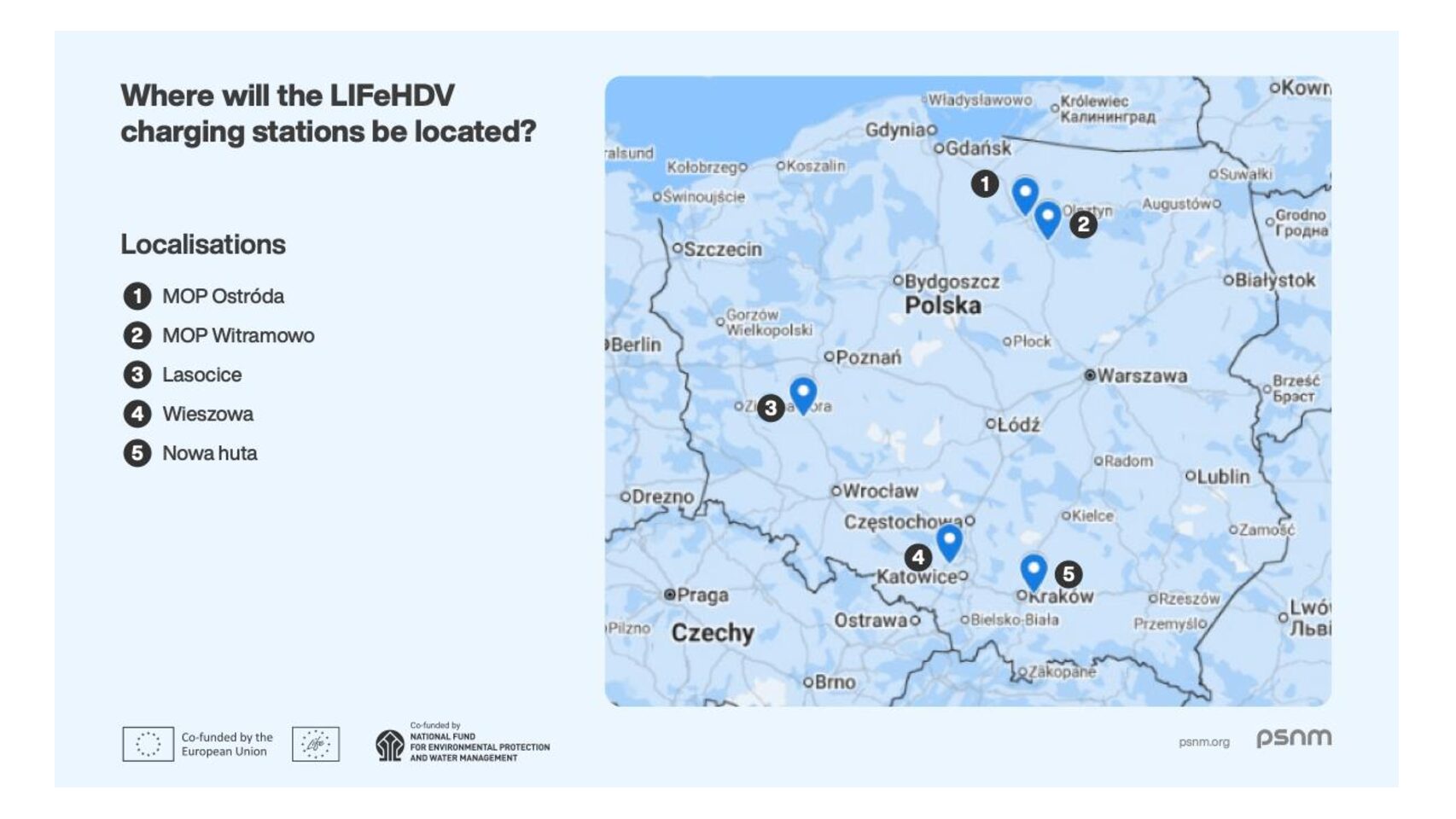
The proposed locations would serve both long-haul and regional freight operations:
- Ostróda and Witramowo rest areas – located along the S7 expressway in the Warmińsko-Mazurskie region, these complementary hubs would support electric freight transport along the same corridor in opposite directions, enabling trucks travelling between northern and central Poland to recharge during scheduled stops.
- Lasocice – near Leszno, with the potential to serve freight operations in south-western Wielkopolska and interregional transport.
- Wieszowa – close to the A1 motorway and Upper Silesia’s industrial and logistics centres, potentially supporting both transit traffic and regional businesses.
- Nowa Huta – in eastern Kraków, with the potential to serve local industrial and distribution activities, as well as freight operations across the Małopolska region.
The selection process combined transport operators’ practical insights with projected charging demand, GDDKiA heavy-duty traffic data and the location of the TEN-T core and comprehensive road networks. VESUVIO provided estimates of electric truck charging needs for 2030, including charging at bases and destinations and en route. Together, these layers form the project’s map of high-potential areas, helping identify where expected energy demand overlaps with existing freight traffic and strategic transport corridors.
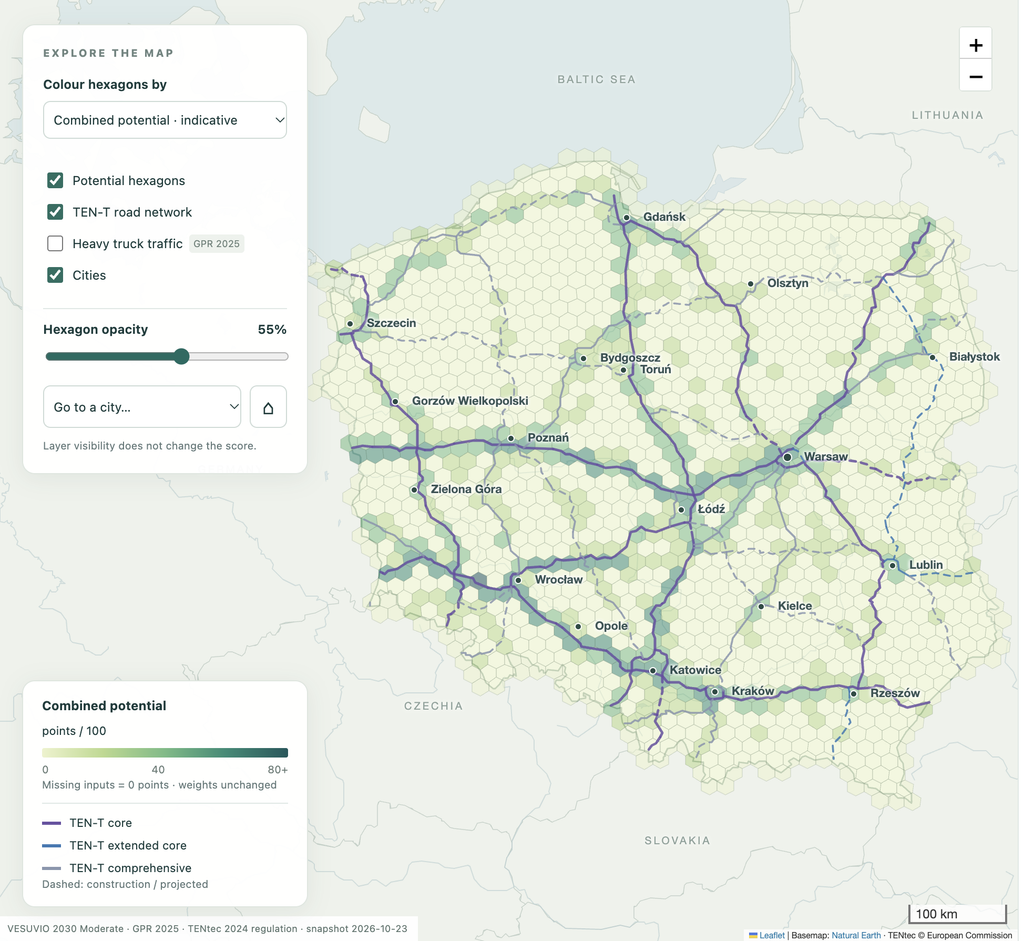
By combining operator input with modelling, the project aims to align charging infrastructure with actual operational needs and support the integration of electric trucks into everyday freight transport. The five sites remain potential investment locations.