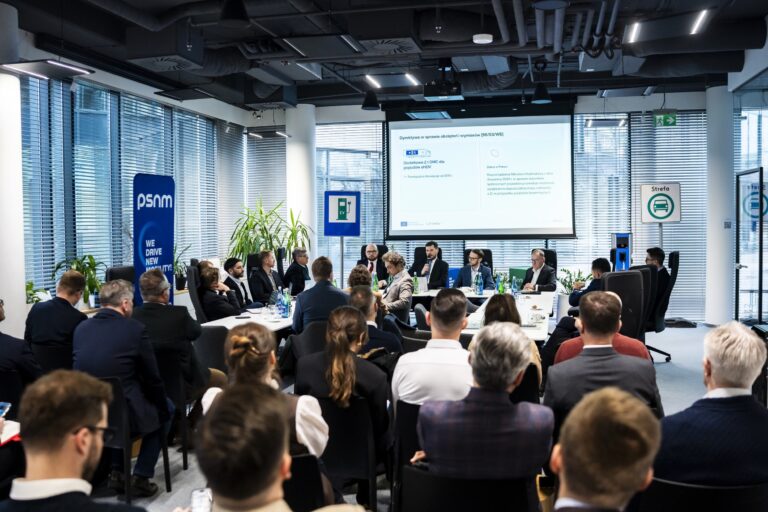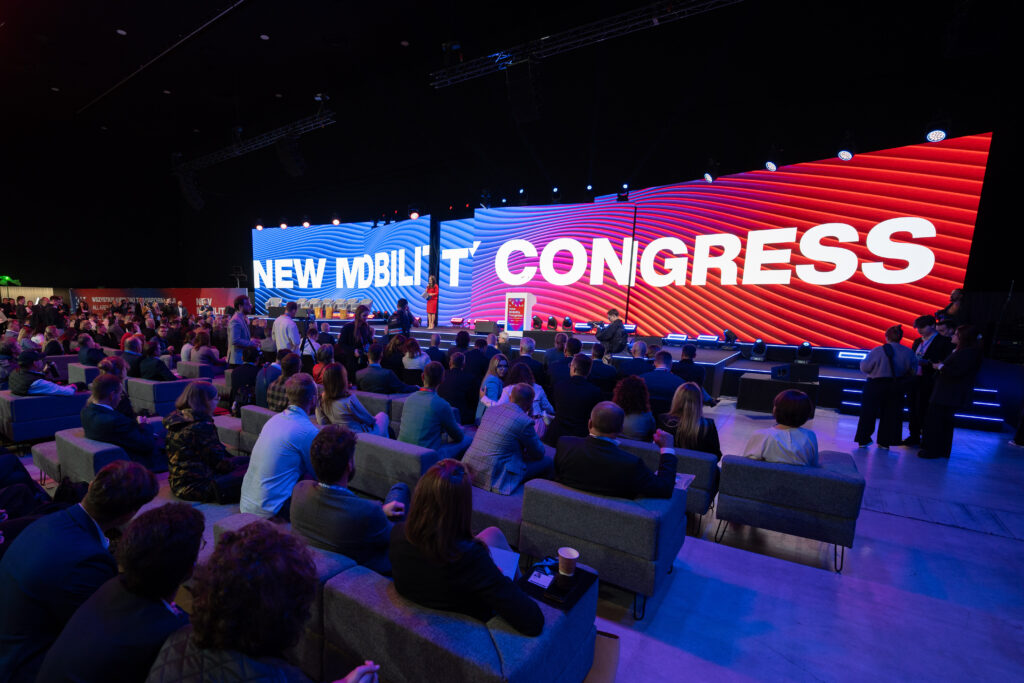
One of the key discussions was the panel „From Funding Ambitions to Market Readiness: PLN 6 Billion, Yet Zero-Emission Heavy-Duty Transport Has Not Taken Off.”
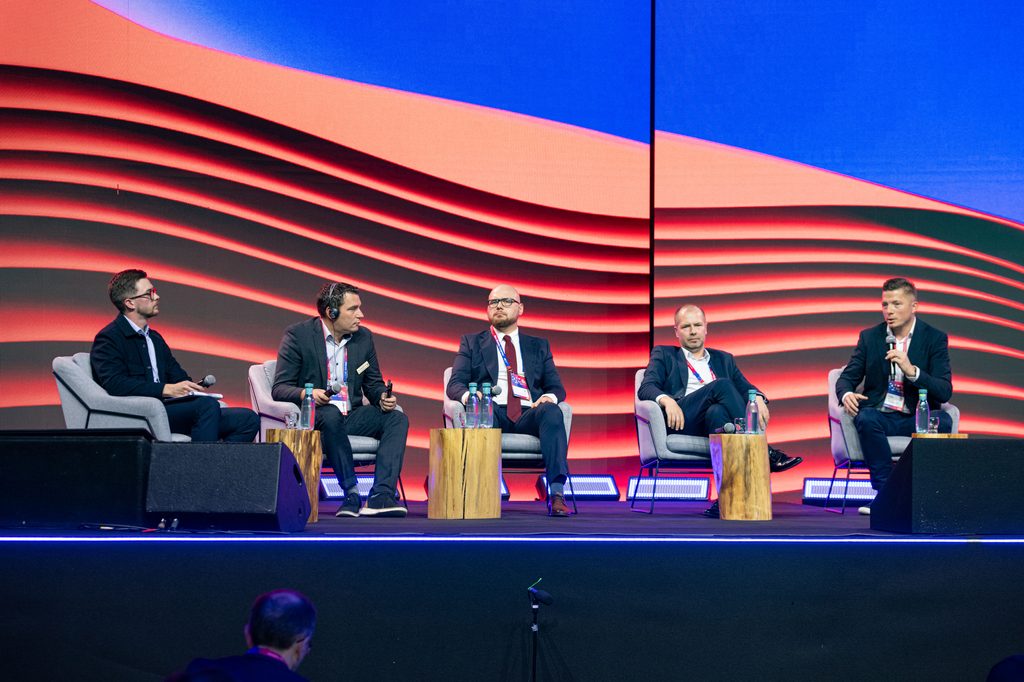
The debate focused on challenges related to implementing charging infrastructure projects and purchasing zero-emission trucks under Poland’s national funding programmes.
The panel brought together representatives of public administration, charging infrastructure operators and industry experts, each offering a different perspective:
- Piotr Stępiński, Director of the Department of Electromobility and Individual Beneficiary at NFOŚiGW, presented the perspective of the public institution responsible for implementing national support programmes.
- Rafał Rupar, Chief Development Officer and Management Board Member at GreenWay, discussed the challenges faced by charging infrastructure operators.
- Marek Popiołek, Business Development Director at PSNM, shared insights into how Polish transport operators and other market stakeholders perceive the available funding programmes, drawing on experience in supporting funding applications.
- Gerrit Pürstl, Sales Director CEE at Siemens eMobility, provided a broader regional perspective, sharing experiences from other European markets in which the company operates.
The discussion demonstrated that there is no single barrier preventing the development of zero-emission heavy-duty transport. Different stakeholders identified different challenges depending on their roles and market experience.
However, particular attention was given to charging infrastructure development, especially the complex and time-consuming procedures for obtaining grid connection conditions and securing sufficient electricity capacity.
These challenges highlight that financial support alone is not enough to accelerate eHDV adoption. The successful transition also requires removing technical barriers to charging infrastructure development, particularly those related to grid capacity and connections, as well as simplifying the complex and time-consuming administrative procedures that continue to delay investments.
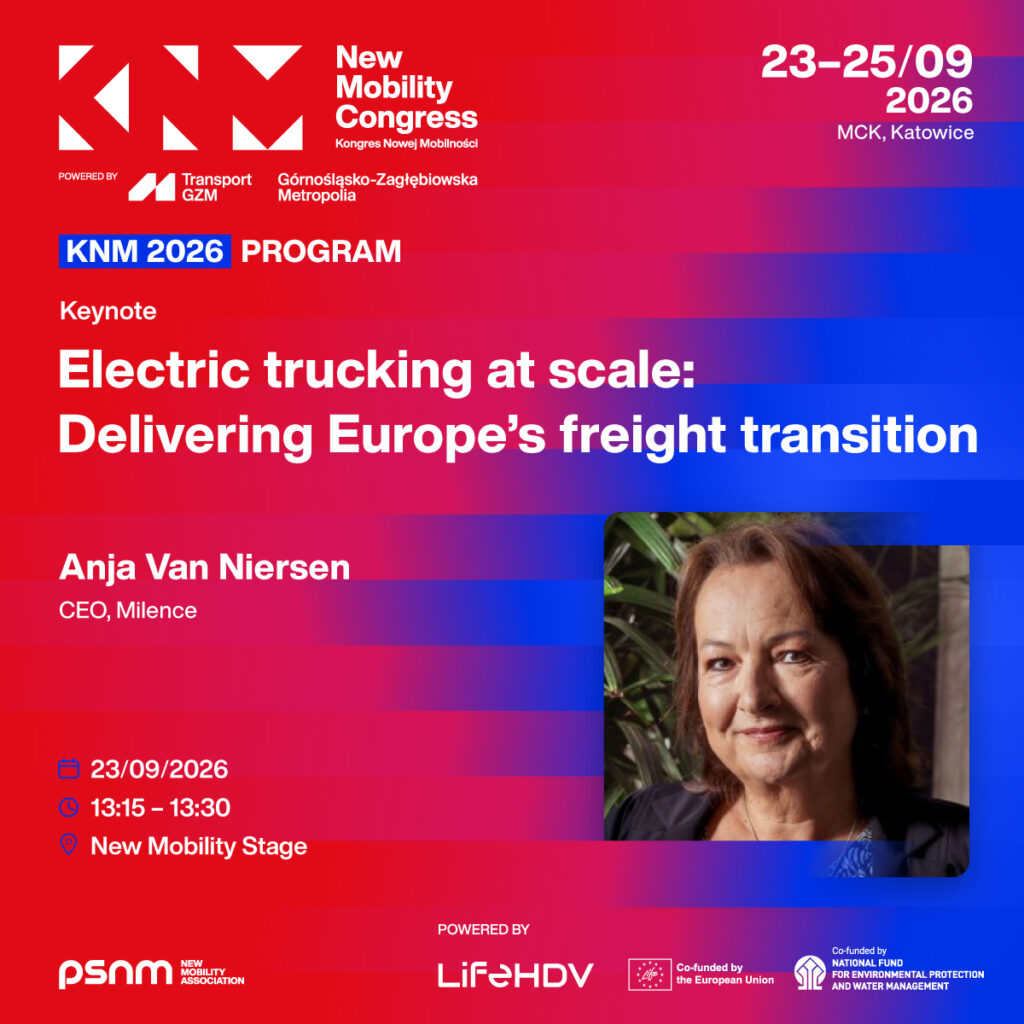
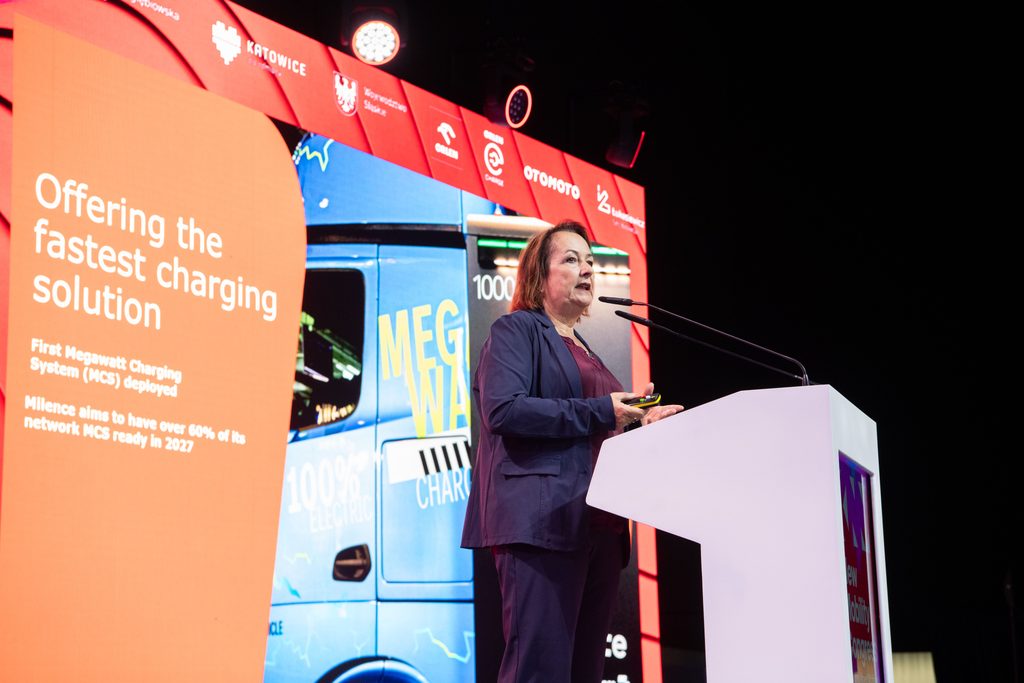
A day earlier, on the same stage, Anja van Niersen, CEO of Milence, presented the company’s strategy for developing a European heavy-duty charging network. She highlighted Milence’s progress in deploying charging infrastructure across Western European markets, sharing practical experience and insights into the development of a network designed to support the electrification of long-haul road transport.