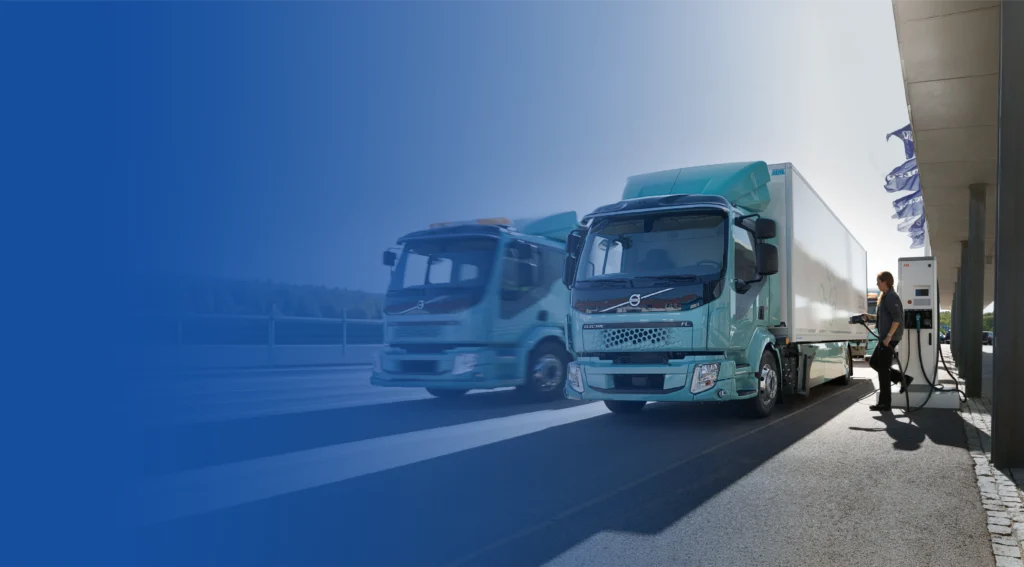
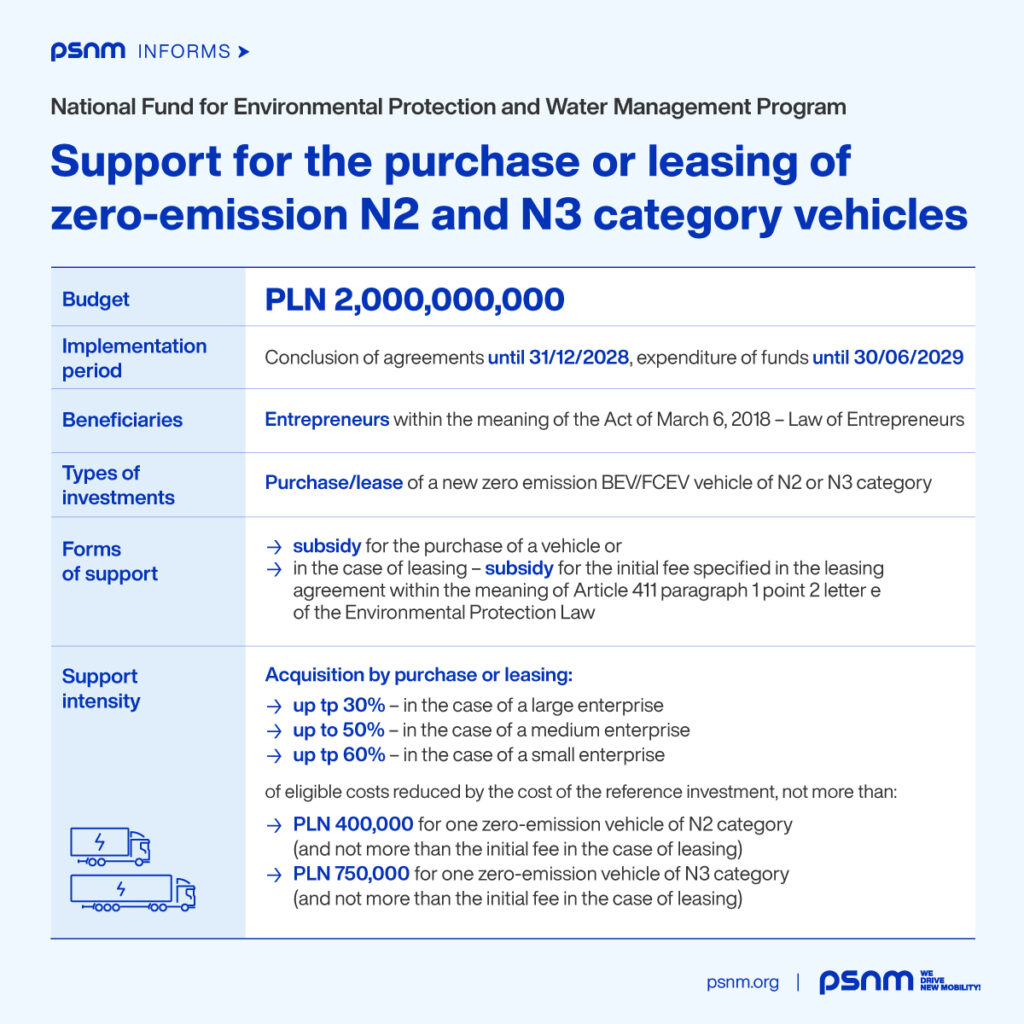
The European Investment Bank (EIB) has approved the National Fund for Environmental Protection and Water Management’s (NFOŚiGW) program to support the purchase of zero-emission heavy-duty vehicles. A total of PLN 2 billion will be allocated for subsidies, PLN 1 billion more than initially planned. This is a long-awaited decision that will have a real impact on the growth of the transport sector, contributing to increased competition from electric heavy-duty vehicles.
The approval of the „Support for the Purchase or Lease of Zero-Emission Vehicles of the N2 and N3 Categories” program is a significant step in the transformation of the heavy-duty transport sector, a long-awaited transformation for the TSL industry—which accounts for 6-7% of Poland’s GDP. Thanks to the program, transport businesses will be able to modernize their fleets, contributing to increased competitiveness in the European market.
„The principles of the program approved by the EIB remain unchanged. The subsidy amount still depends on the size of the company and the type of vehicle being supported. In the case of purchases, subsidies can amount to a maximum of 30% of eligible costs for large enterprises, 50% for medium-sized enterprises, and 60% for small enterprises.” However, the total amount of support cannot exceed PLN 400,000 for category N2 vehicles or PLN 750,000 for category N3 vehicles. If leasing is chosen, the subsidy cannot be higher than the initial leasing fee,” explains Piotr Ziółkowski, Coordinator of the PSNM Committee for Logistics and Transport.
In addition to support for the purchase of electric trucks, two other key support programs, which have already received approval from the European Investment Bank, are expected to launch soon. These include the construction and expansion of electricity grids for publicly accessible high-power charging stations and the development of public charging stations for heavy vehicles. The total budget for these initiatives is PLN 6 billion, and their beneficiaries will include charging station operators.
„The program for the construction and expansion of publicly accessible charging stations for heavy vehicles received a positive recommendation from the European Investment Bank in March 2024. Despite this, we forecast that its launch will not occur until the first half of 2025. These delays may pose a challenge for the industry, but we hope that intensified efforts in the coming months will allow for their rapid implementation.” According to the project’s assumptions, at least 80% of the PLN 2 billion budget will be allocated to subsidies for chargers located along the TEN-T network, and the remaining 20% will be allocated to charging stations in logistics centers and intermodal terminals. The program is to be implemented until 2029, and funding will be awarded through competitions, where the evaluation of submitted applications will take into account criteria such as funding effectiveness, implementation deadline, and material efficiency,” says Maciej Mazur, Managing Director of PSNM.
The European Investment Bank also approved the „Construction/Expansion of Power Grids for Publicly Accessible High-Power Charging Stations” program, which is aimed at distribution network operators. Its goal is to develop energy infrastructure supporting the creation of public charging stations located along the main TEN-T routes, in logistics centers, operational bases, and intermodal terminals. The program’s budget is also PLN 2 billion.
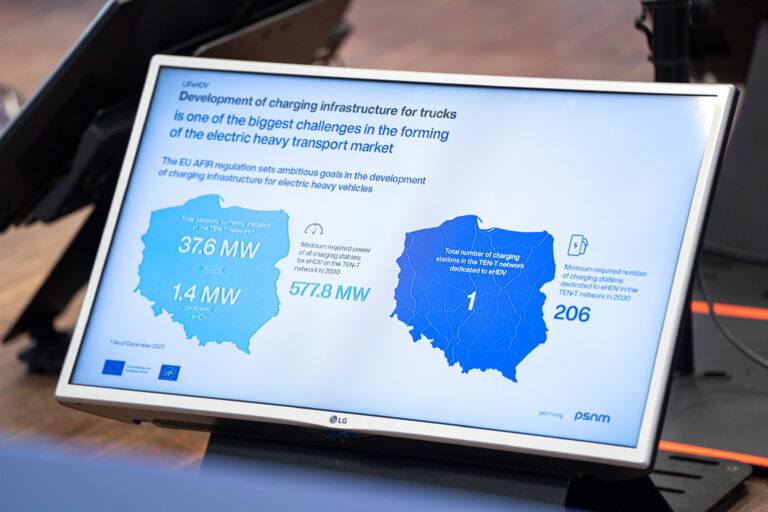
„Despite its leading position in heavy transport, Poland has still not begun the transition of its truck fleet to zero-emissions at an appropriate pace, which, in extreme cases, could lead to transport exclusion in the coming years. Currently, only about 100 electric heavy-duty vehicles (eHDVs) are on Polish roads. The implementation of the long-awaited support programs will be a significant step towards maintaining the status quo in the sector. These initiatives, thanks to their comprehensive nature, offer hope for rapid market development and increased interest in electrification among transport companies in Poland,” adds Piotr Ziółkowski.
The TSL sector in Poland is responsible for generating 6-7% of GDP, comprising 125,000 companies and employing approximately 750,000 people. Considering the groundbreaking changes taking place in this area in the European Union, the development of electromobility is essential to protecting the competitiveness and innovation of the Polish market. This is determined by the EU’s strategic goals, subsequent proposals to tighten emission standards for heavy-duty vehicles, and the aspirations of many companies to decarbonize supply chains, which will also include the freight transport phase. Therefore, it is necessary to support the development of the Polish TSL sector in the powertrain transformation and strive to strengthen Poland’s position in the European arena of heavy-duty transport.
The programs also reinforces the broader objectives of the LIFeHDV project, which focuses on enabling the large-scale deployment of electric heavy-duty vehicles through the development of charging infrastructure, market cooperation, and regulatory dialogue. The availability of vehicle purchase subsidies significantly increases the practical impact and market relevance of the project, as it complements infrastructure development with concrete support for fleet electrification. Together, these mechanisms create a more complete ecosystem for the growth of zero-emission freight transport in Poland.