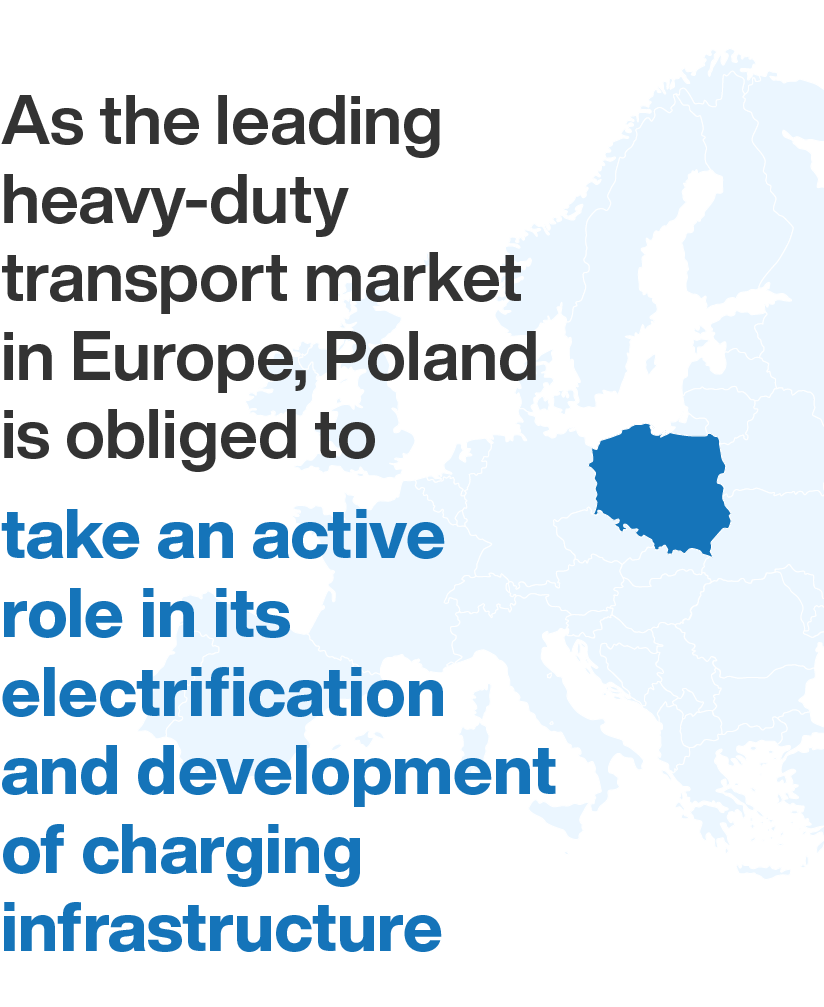
Poland, as one of the leading
markets in heavy transport
in Europe, is obliged to
take an active role in the
electrification of this sector
and the expansion of the
charging infrastructure that
supports it
The HDV Market in Poland
The TSL sector plays a strategic role in the Polish economy, acting as a key driver of trade, employment, and international competitiveness, while supporting supply chains across both domestic and European markets

Share of the TSL
sector in GDP

Revenues of the entire
TSL sector (in PLN)

Number of
people working
in the TSL sector

Number of
companies operating
in the TSL sector
Number of
transport
companies
Share of the TSL
sector in GDP
Revenues of the entire
TSL sector (in PLN)
Number of
people working
in the TSL sector
Number of
companies operating
in the TSL sector
Number of
transport
companies
Poland as one of the European Leaders
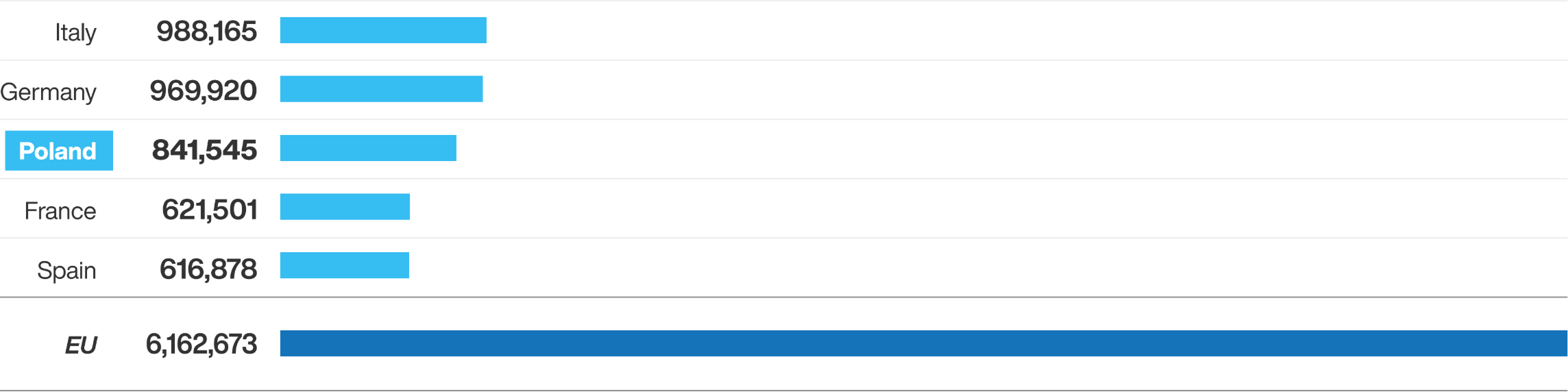
Poland stands among Europe’s leaders in road freight transport, operating one of
the largest truck fleets and ranking third – close to Germany and Italy, and ahead
of France and Spain
Truck fleet in Europe (over 3.5 t)

Average age of trucks
registered in Poland
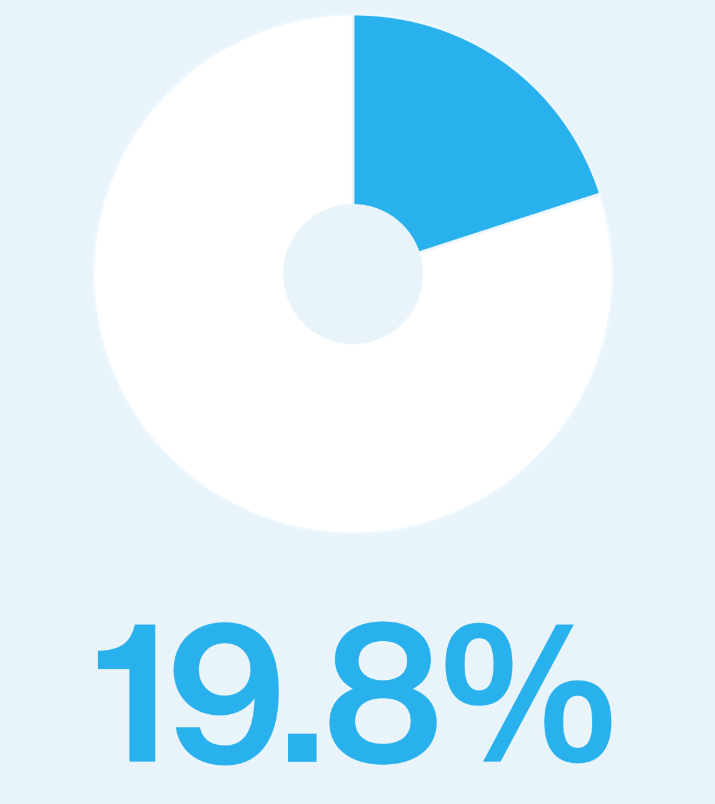
Share of Polish carriers in
transports within the EU
(expressed in
tonne-kilometers)
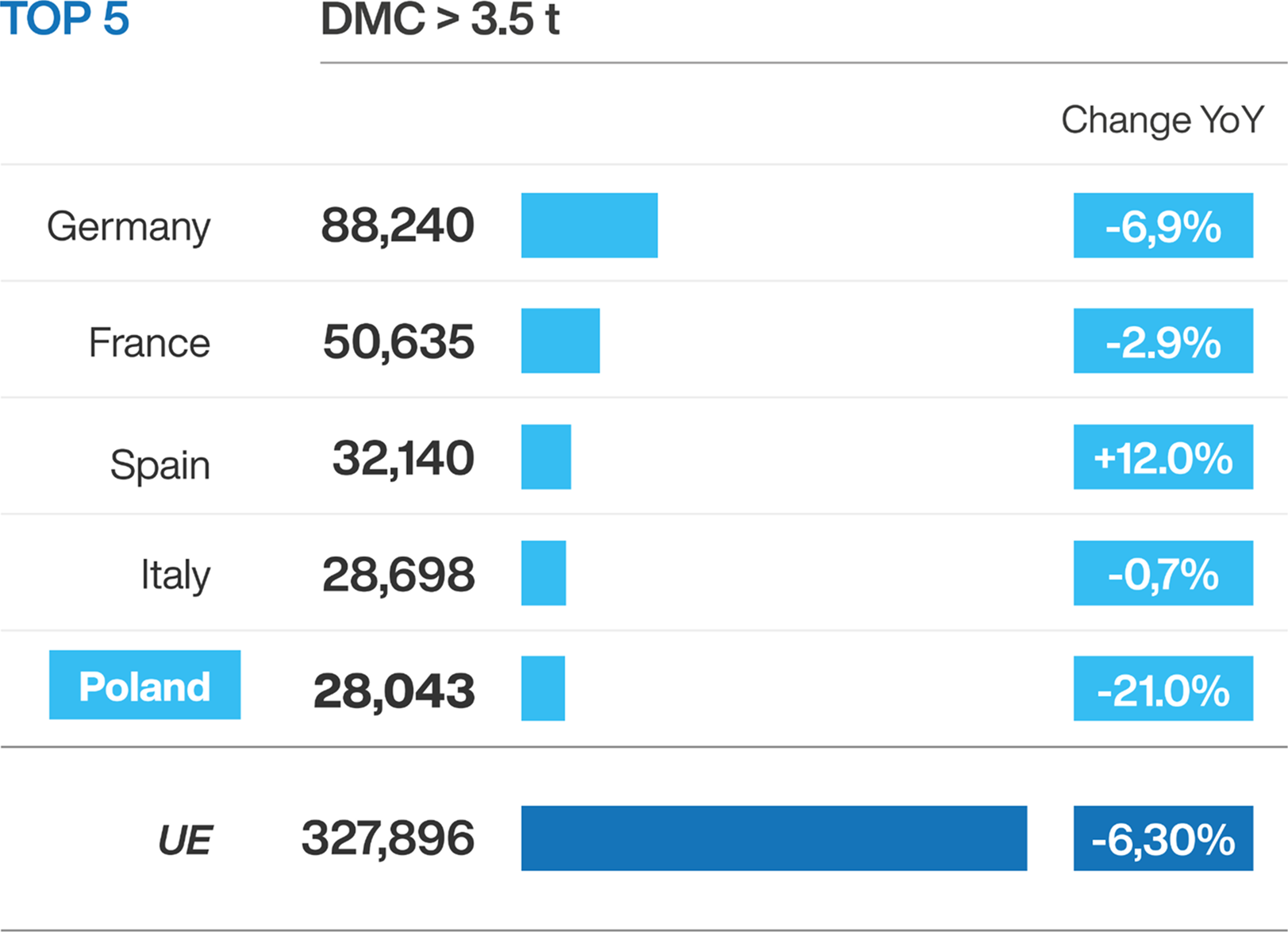
Poland is also one of the European Union’s leaders in the registration of new heavy-duty vehicles, highlighting strong investment momentum and the continued expansion of its road freight sector
First registrations of new trucks in Europe
(2023)
Switching to eHDV
The electrification of Poland’s road transport sector is progressing at a noticeably slower pace than in Western European countries, reflecting structural, infrastructural, and cost-related challenges that continue to hinder faster adoption
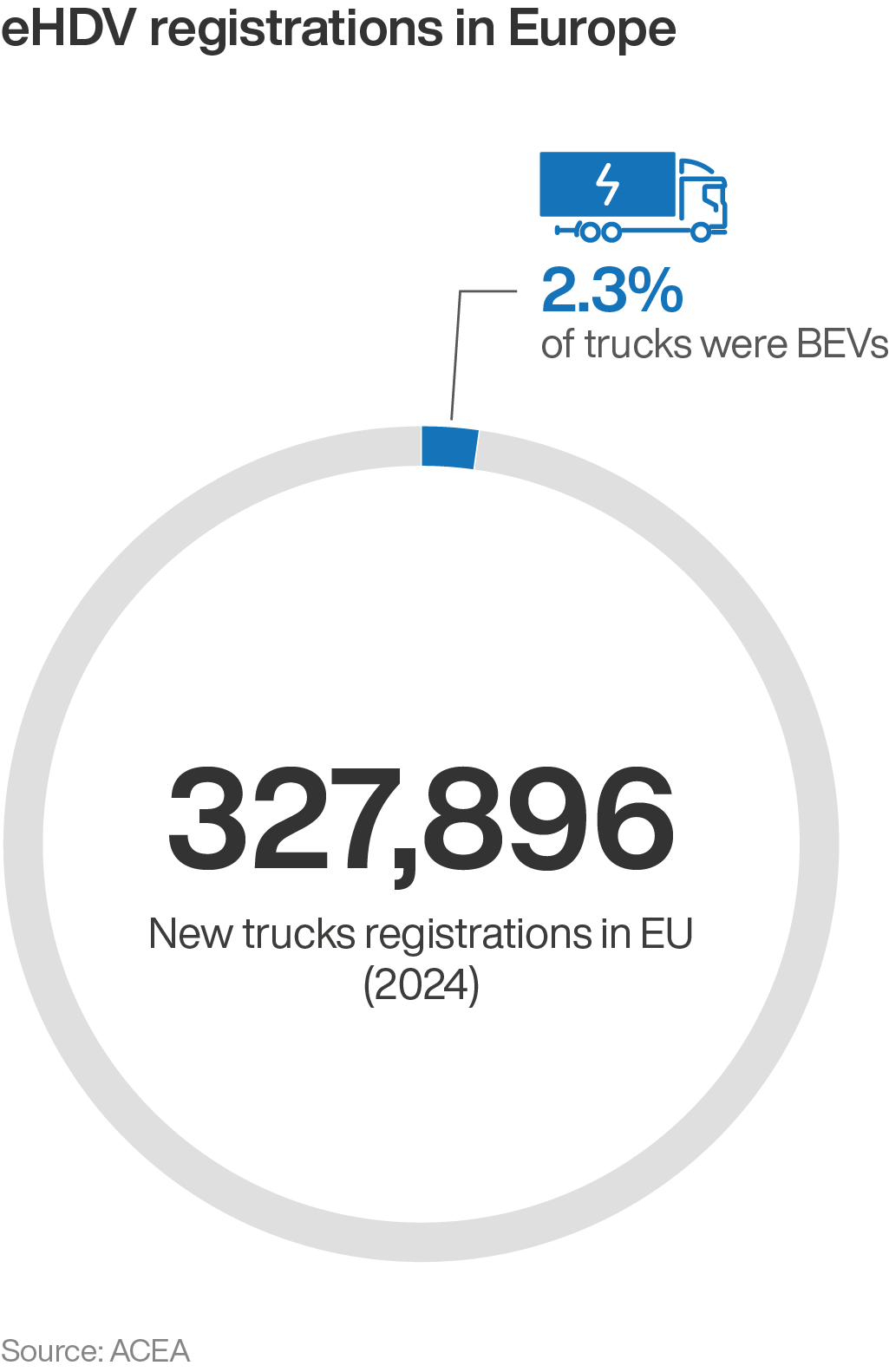
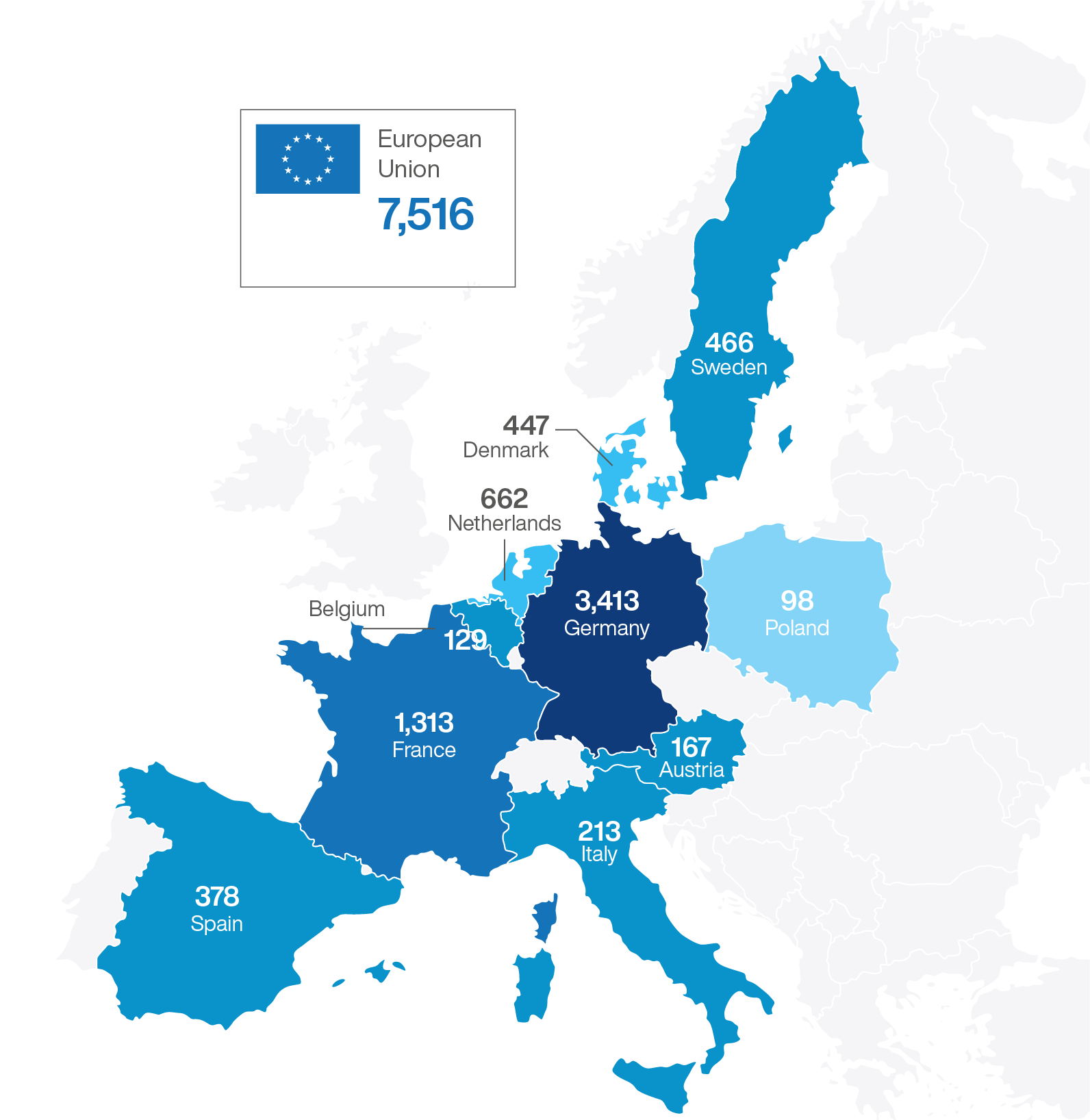
In Poland, several barriers to the development of electric heavy-duty transport remain in place, many of which are similar to those observed in Western European countries, indicating that key structural challenges have yet to be fully addressed across the broader European market
First registrations of new trucks in Europe
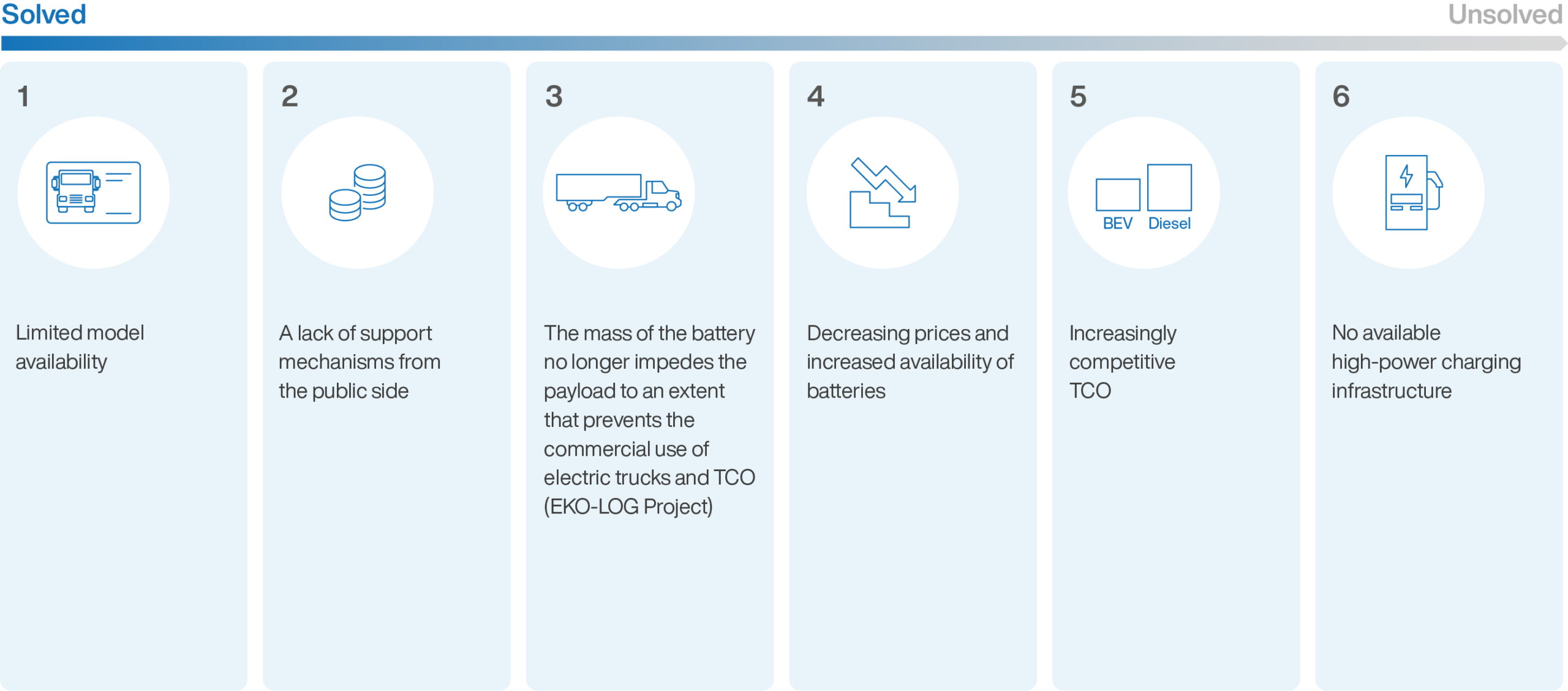
The development of charging infrastructure remains one of the greatest challenges for the sector. Its pace and scale are increasingly shaped by EU-level regulation, in particular the AFIR Regulation, which sets binding targets and obligations for all Member States regarding the deployment of alternative fuels infrastructure
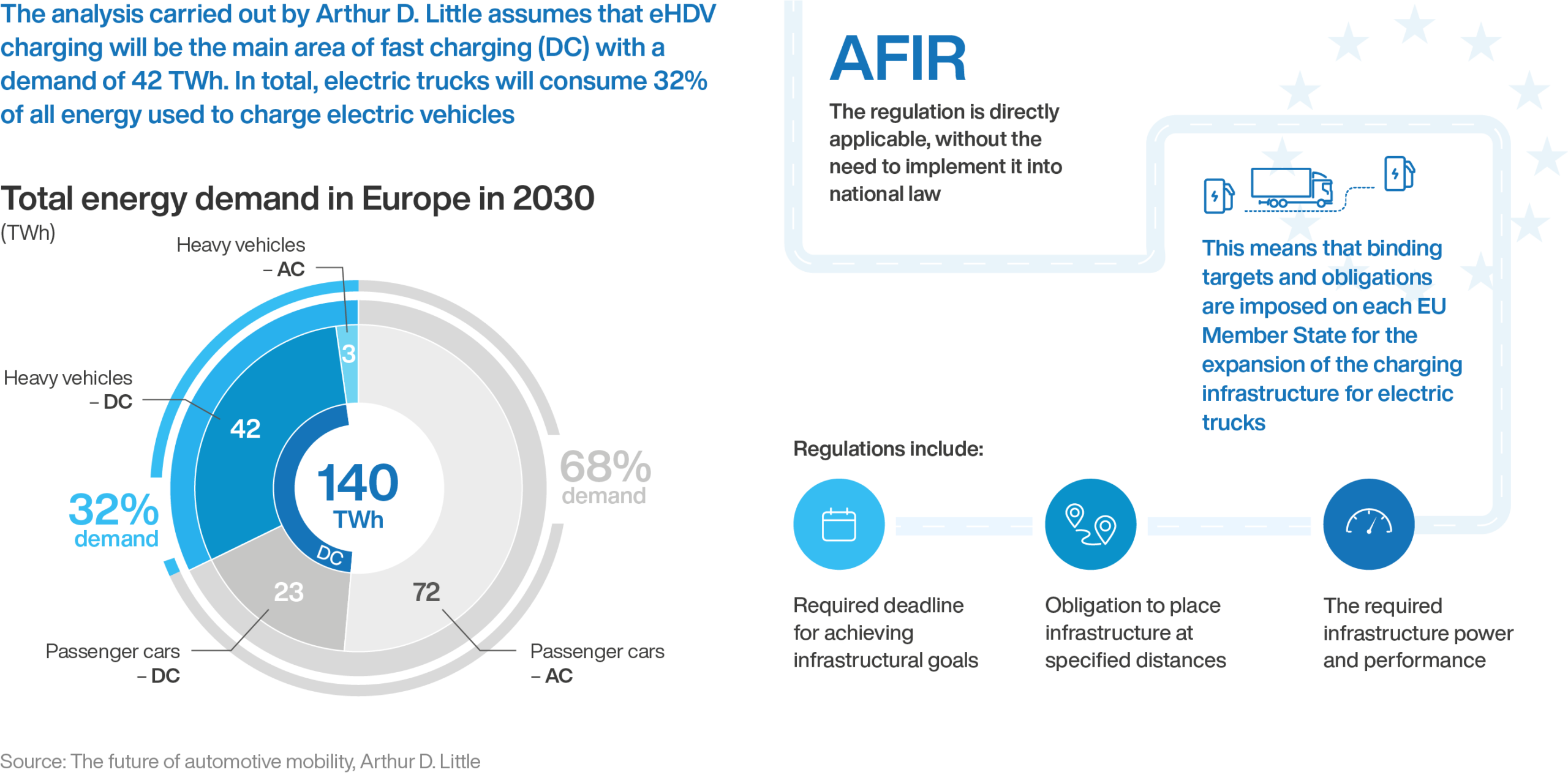
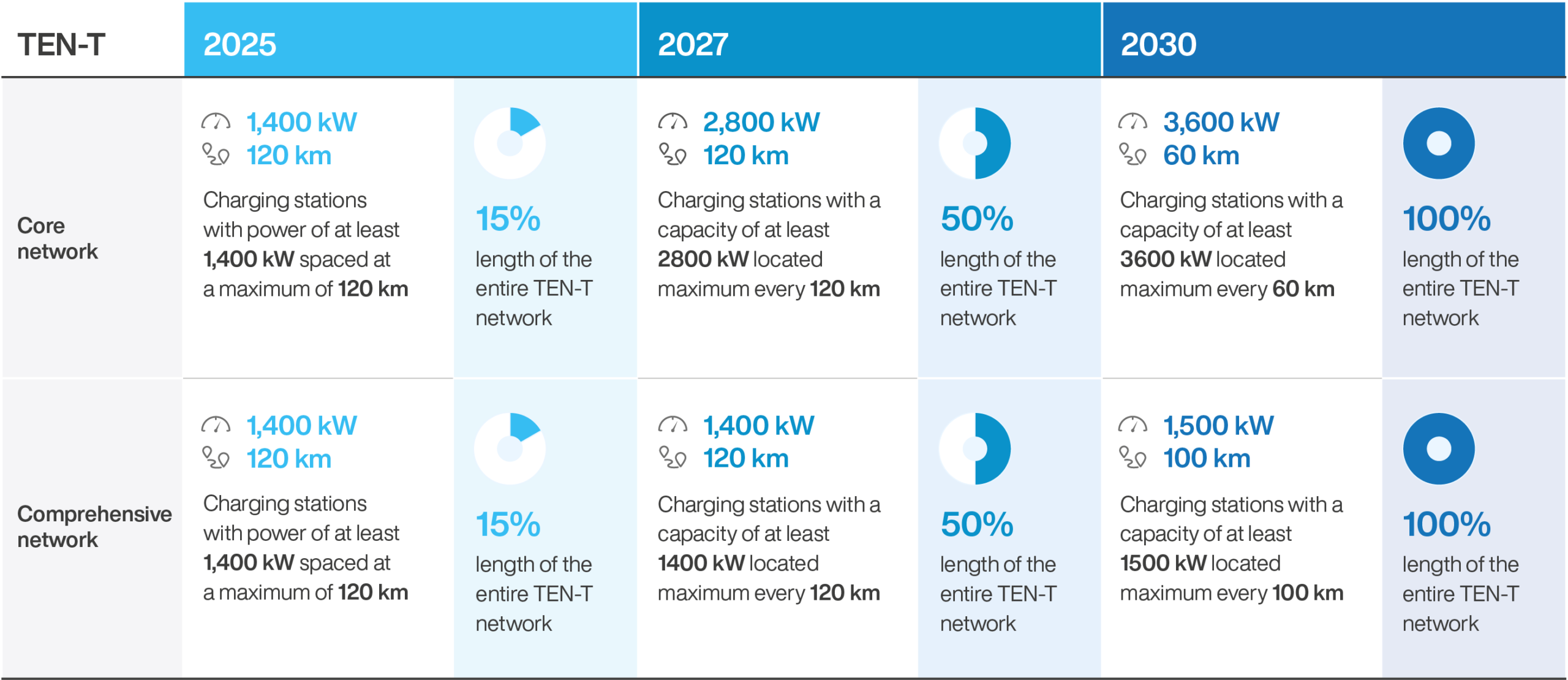
AFIR requirements for heavy goods vehicles
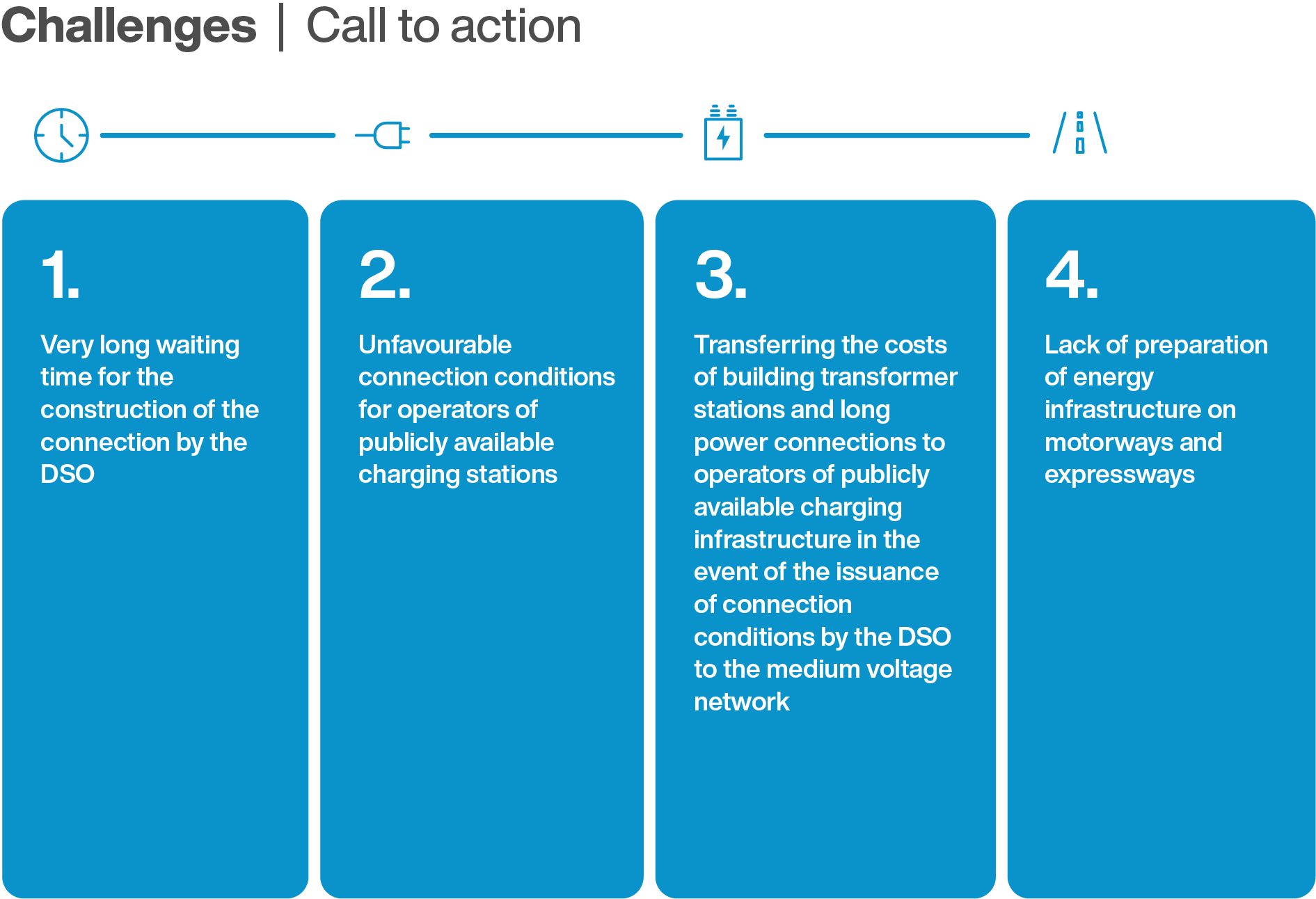
The development of charging infrastructure is associated with systemic challenges that represent a major barrier for the entire industry, requiring coordinated action from regulators, grid operators, and market participants
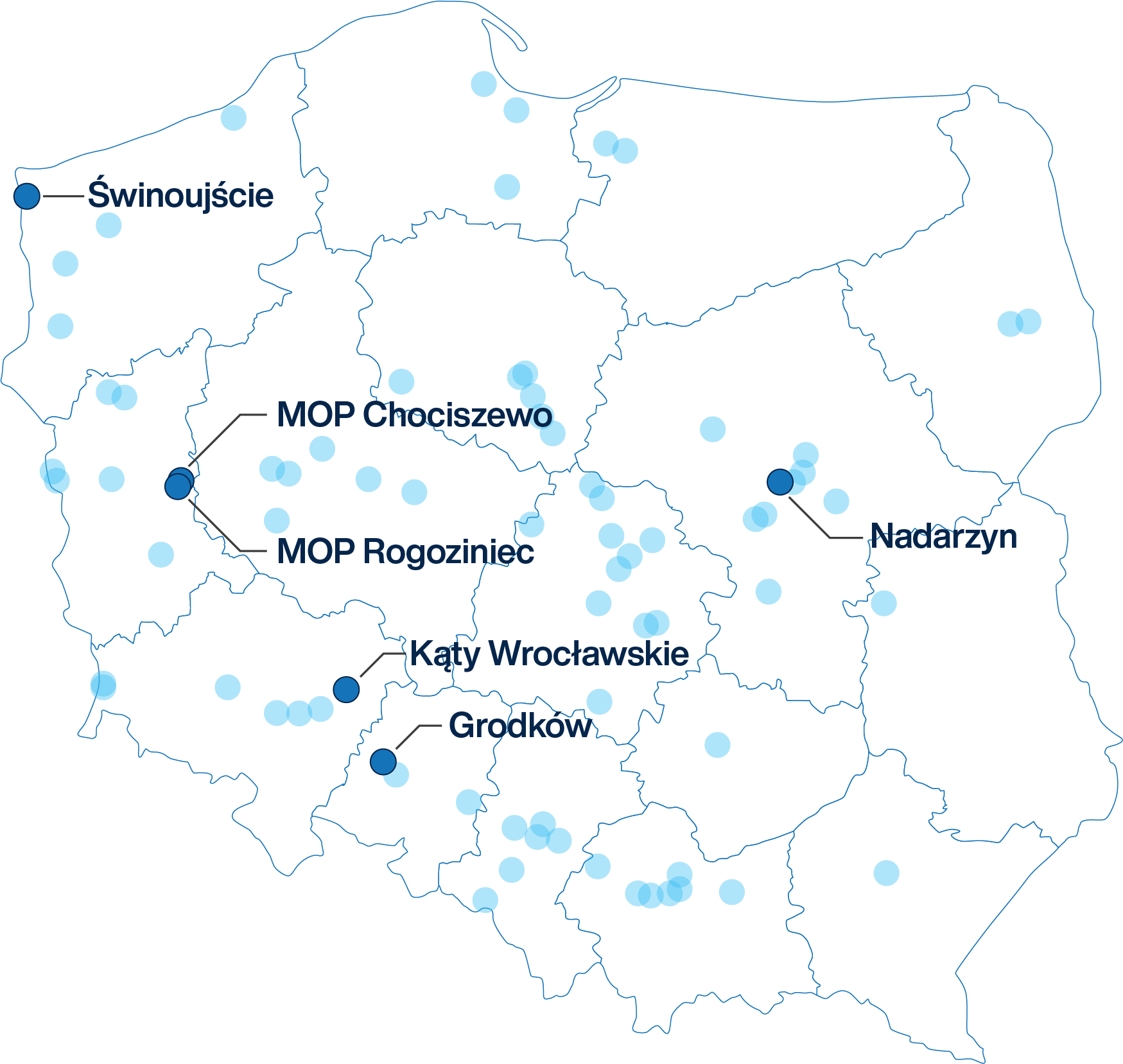
Number of eHDV charging stations in Poland